Strangeness is Gratitude
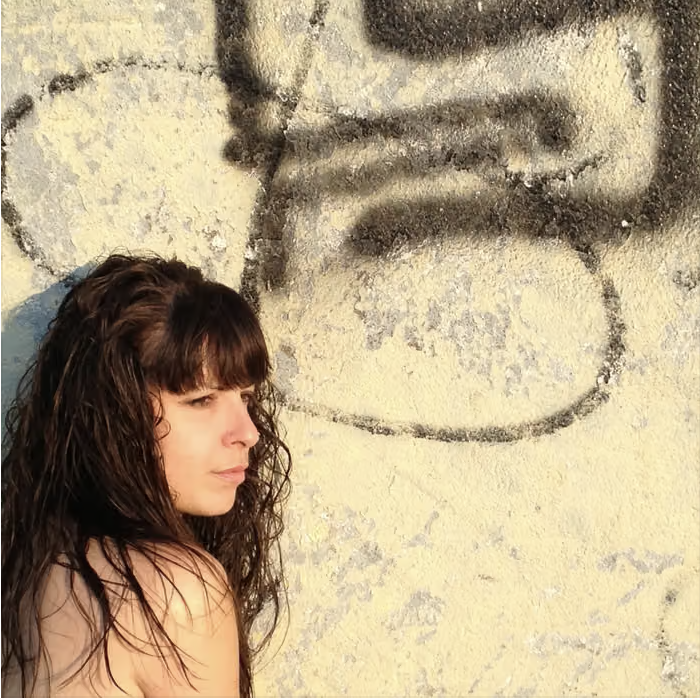
This is my first solo album, of which I enjoy telling the story.
What story? One of deep transformation, during which I released my interpreter skin to embody my creator identity. I had just finished my doctorate in music at University of Montreal when questions started to arise within me: was I really still absolutely sure of my path as an interpreter, a commissioner of pieces for solo baritone saxophone, or was there something else I wanted to listen to?
I explored this burning question during a residency at le Gesù in Montreal, a beautiful church providing 7 seconds of the purest reverberation. And then spotted a building under construction in my neibourhood. As I started to explore its 12 seconds long reverberation by night, a stronger bond between sound, space, myself started to emerge. Far from daylight, from complex scores that used to enchant me, intimate resonances became my vocabulary.
In this place now gone, I walked and listened to my footsteps. I listen deeper and heard the distant sounds of footsteps in the stairwell, another life going about their business. I played long notes and opened myself up to their echo, the response of the space amplifying them. The rattling of the keys bouncing off a glass window, the intimacy of my breath filling my lungs right before growling a low and loud note, the space within me being held by the space all around me.
I soon gathered a group of friends and their microphones to record my first solo album. One of them, in the elevator taking us to the floor I had chosen to record, asked me how I got the authorization to do this. I realized that I had never even thought about asking anybody if I could or not resonate at night with these concrete walls and giant glass windows… some processes don’t request authorization. Instead, they belong to the night, to the underground until their magic has been completed. Then, they can be presented as fully fleshed projects which will get all the authorizations needed to keep resonating. Or not!
Strangeness is Gratitude was born out of bonding with the unknown, in a cryptic dance of call and responses. Trusting the process, I found my true artistic self.
We Become Giants
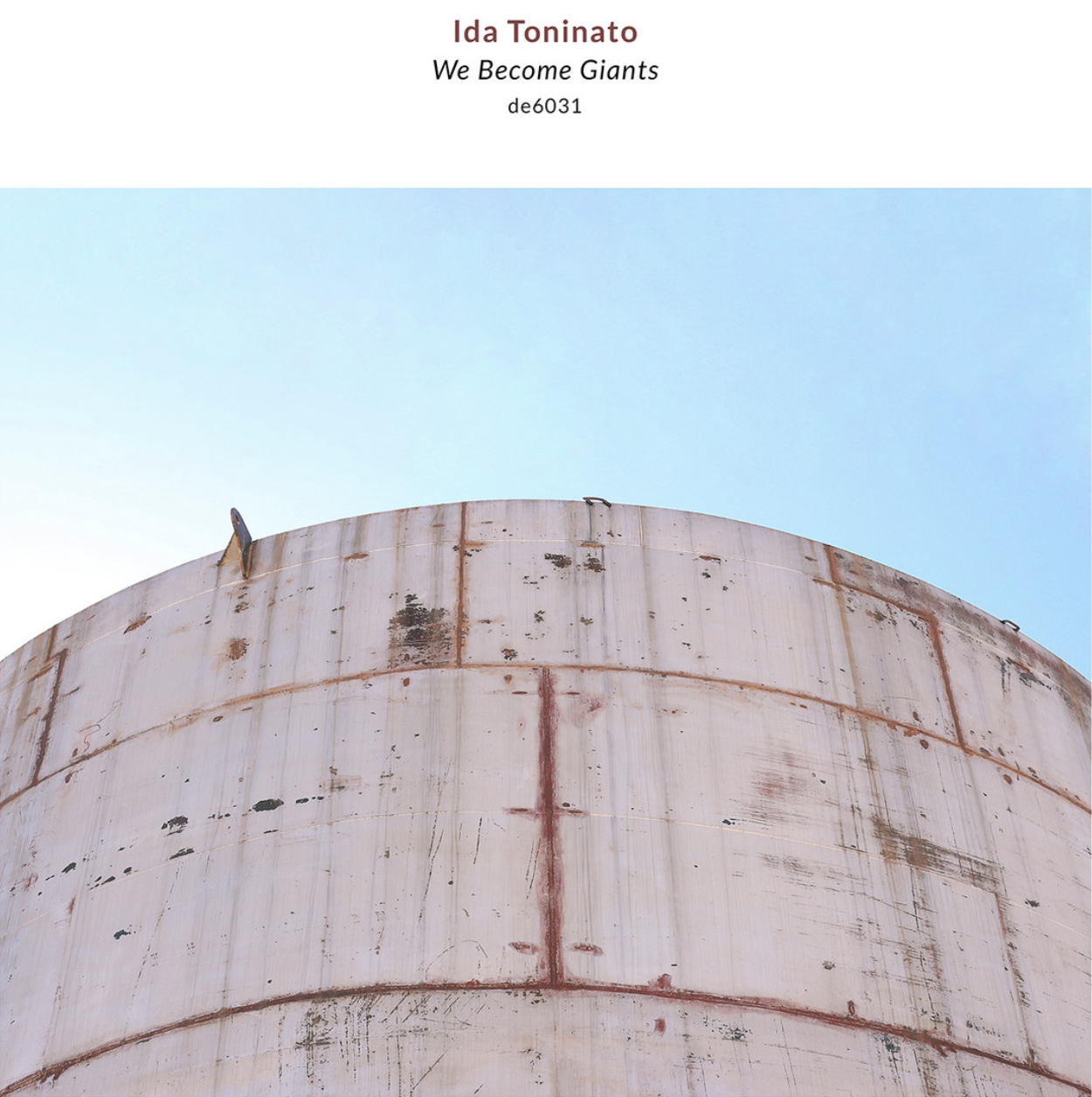
Once upon a time, a friend called to ask if I knew about The Tank Center for the Sonic Arts in Rangely, Colorado. I did not. But I imagined it could be cool: a former water cistern transformed into a recording and performance space in the middle of the high desert. Exciting. 40 seconds of reverb. I packed my bags, called two friends, and off we went (it actually took a lot longer, but I’ll leave the practical headaches out).
Anyhow, we flew and drove with cases full of gear. Unloaded our stuff at the hotel, and drove out to meet the beast. And then—ONCE UPON A TIME IN RANGELY, COLORADO—I stood in front of one of the most awe-inspiring, magic-making places I have ever encountered.
The Tank is a giant steel silo with a story full of wonder and meant-to-be. Its 40-second reverb is thick, dense, and completely inseparable from the rattling screws holding the structure together. The desert wind blows through the roof and takes over the soundscape with sheer majesty. Frequencies stretch out forever; slipping into a trance is the only way to dive into the absolute lushness of it. And the best part? Outside the walls, desert silence reigns supreme.
After five days of recording on site, we left this place of wonder. Back in Montreal at Studio Makina, producer Blaise Borboën-Léonard and I built an artificial sonic space that wraps itself around that natural reverb. Blaise’s lush synths pulse through the record, turning it into slow, patient music that begs for a listening ritual.
The album opens with Avant les forêts, a track based on low-register multiphonics and a single, repetitive interval that makes me feel like I’m asking “what is there?” every time I play it. I feel like standing at the edge of a forest at dusk, wondering if I’ll dare stepping into its thick darkness. Blaise re-amped some of the stems through a bass amp glued to a snare drum topped with a ring of keys. If that sounds like cryptic audio jargon to you, just imagine the sonic equivalent of homemade ice cream topped with whipped cream, caramelized walnuts, and your favorite berries. I love this track for the magic that happens when artists throw their ingredients into the same pot: I brought the raw saxophone material, emotion, and drive; Blaise brought his boundless creativity and skills, moving everything forward.
Then comes the title track, We Become Giants. It features a bell that lives inside The Tank. But not just any bell: THE bell. Its story is completely unlikely:
It was originally the titanium nosecone of an oxygen tank for an Apollo Mission. Sidelined by a minute flaw, it never went to space and was given to the engineer who made it. He used it as a barbecue grill for years, then passed it to his daughter, who turned it into a flower pot. When sound artist Bruce Odland spotted it sitting in her garden, he said, "That's not a flower pot, that's a bell." She gifted it to The Tank. And I got to play it.
When you listen to the track, imagine that this bell was meant for deep space. Instead, it became an instrument singing inside a desert silo.
Burning Bright was inspired by the final section of Ray Bradbury’s Fahrenheit 451. It starts with beating frequencies between an oscillator and the saxophone, growing into a throbbing, pulsing melody. Something about it feels remarkably smooth until suddenly it isn’t anymore: brightly we burned, and exhausted ourselves doing so.
After all that tension and massive sound, Pour retourner au silence and Antares are the calm. I wanted to play hymns. Soft melodies soothing our anxious souls. Somehow, I couldn’t help it but to take them to places of intensity, but I guess it’s part of playing with and the Tank: It made me feel like inside the belly of the beast, we became giants.
Still today, We Become Giants is one of my favorite records. A part of me stayed behind at The Tank, just to keep listening.
We speak about projects on the phone all the time. Right?
But some phone calls leave their imprint on our ears for much longer than others, and even become milestones of our creative lives.
That phone call on a day of the year 2018 is one of them.
I had just performed at an installation in a building that was scheduled to be demolished when Frédéric Dallaire, a film maker, called me to talk about an idea. He started to remind me that we met on that occasion, and then he listened to my album Strangeness is Gratitude, and then, he dropped it: do you want to make a film together? I’d love to make a film about your creative process and how it merges with mine. One of his specialities is the creative mixing for a film and so this collaboration, which is probably one of the most exciting of my life started.
He asked me which kind of acoustic spaces I was really curious to explore and I asked for a cargo. So he got a cargo. A couple of months later, he called and said “I got the cargo”. Unbelievable.
Anyhow, Le rêve d’Ida is an almost entirely black and white sonic documentary in which you’ll hear me play and create in 4 different reverberant spaces, as I interact with the sound engineers. We discuss about how everybody hears and listens to the music from their different perspectives. One of the spaces in which we recorded is the site under construction I recorded strangeness is Gratitude in. Oddly enough, as much as I relentlessly visited this place at night for many months, it felt completely weird to go there with a film team. Everything became noisy and bright all of a sudden, which completely caught me off guard: I hadn’t realized that filming there would actually mean to break the silence, the obscurity and solitude that I was wrapped in whenever I went there.
Also, it is on this set that I met with composer and sound artist Chantal Dumas.
Chantal became one of my dearest friends and passed away since. One of my favorite pieces from her lives here. Enjoy!
Also, spoiler: Fred and I have just finished our new film. Called Nos espaces résonants, it is inspired by the spaces that actually moved us in our creative journey. More on this soon!